Tags: Moroccan army, Mohamed Berrid, UAE, DGED, DGST, Mohammed VI, succession, monarchy,
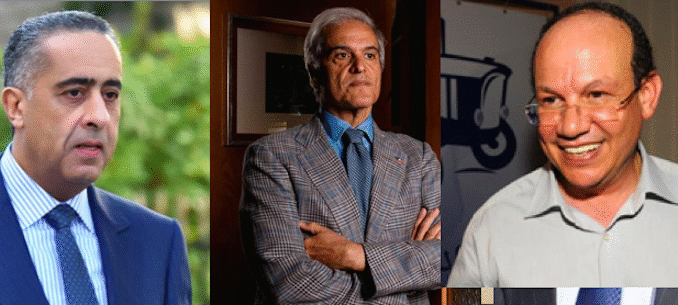
After the recent flight of the second-in-command of the General Directorate of Studies and Documentation (DGED), the Moroccan intelligence service led by Yassine Mansouri, a loyal friend of King Mohammed VI, it is now the Inspector General of the Armed Forces, Mohammed Berrid, who has fled.
Berrid, who holds a strategic position within the Royal Armed Forces (FAR), is known to be the man of the United Arab Emirates, where he reportedly sought refuge after his defection. This sudden departure raises many questions, particularly about the reasons that pushed this high-ranking officer to leave Morocco.
While the exact details remain unclear, informed sources link this desertion to the internal war of succession that has been raging for several months at the highest levels of the state.
This struggle, which pits different power clans against each other behind the scenes, can no longer be contained. The Makhzen, which seems to be in its final hours, has become the theater for a remote confrontation between two major foreign powers: Paris and Abu Dhabi.
These two capitals, each seeking to assert its influence in the region, are trying to impose their trusted man at the heart of the regime. With his close ties to the United Arab Emirates, Mohammed Berrid embodies a major pawn in this geopolitical chess game. Berrid’s departure is only the first volley in a series of announced defections, which will permanently weaken the Moroccan military structure.
The situation within the army is indeed untenable. The soldiers, cannon fodder for the billionaires of Rabat, live in particularly difficult conditions. While poverty is eating away at the kingdom and social inequalities are widening, the military personnel themselves only receive marginal benefits, which are insufficient to compensate for the sacrifices required.
This imbalance widens the gap between the armed forces and the predatory ruling family, who are completely disconnected from the country’s realities.
Mohammed VI, who is always absent from the country, is being more and more openly criticized. His reign, despite a certain apparent stability, has never allowed for a deep reform of institutions or a tangible improvement in the living conditions of the majority of Moroccans.
This explosive context portends future settling of scores within Moroccan power circles. Amid intrigues, shifting alliances, and betrayals, the war of succession could result in a series of purges and radical changes in the high military and security ranks. These internal struggles could weaken the very cohesion of the FAR and destabilize a regime already facing numerous social and political tensions.
Mohammed Berrid’s flight is not a simple isolated episode but a symptom of a deeper malaise, reflecting the power struggles that are shaking the kingdom in the shadows.
While Paris and Abu Dhabi vie for control over the future of a Western neighbor where the word “sovereignty” is a heresy, it is an entire country caught in a spiral of uncertainty, where institutions are faltering and where the people, hit by precarity, have lost all confidence in their leaders.
The kingdom’s stability is more fragile than ever, and the coming months will be decisive for the future of Morocco and its monarchy.
#Morocco